
Vietnam U23 vs Philippines U23: 17 shots, one long throw, and the worry hiding at the near post
core_answer: U23 Việt Nam gặp U23 Philippines lúc 13h30 ngày 18 tháng 9 tại Asian Games 2026. Việt Nam cần thắng để giữ quyền tự quyết, nhưng đối mặt hai rủi ro: tỷ lệ chuyển hóa chỉ 5,9% và điểm yếu ném biên dài đã khiến họ thủng lưới trước chính đối thủ này.
key_facts: 18 tháng 9 năm 2026, 13h30 giờ địa phương, lượt trận 2 bảng C môn bóng đá nam Asian Games, tổ chức tại Nhật Bản.; U23 Việt Nam: 17 cú sút, 1 bàn thắng, tỷ lệ chuyển hóa 5,9% trong trận hòa 1-1 với U23 Kuwait.; U23 Philippines thua Uzbekistan 1-5 nhưng ghi bàn ở phút 62 khi chỉ còn 10 người sau thẻ đỏ của Gavin Muens phút 48.; Philippines đã ghi bàn vào lưới Việt Nam từ pha ném biên dài của Antoine Ortega cho Merino Martin đánh đầu, bán kết U23 Đông Nam Á 2025.; U23 Việt Nam chỉ có 2 cầu thủ từng đá đội tuyển quốc gia (Ngoc My, Dinh Quang Kiet); hơn một nửa đội Philippines thì ngược lại.
source_attribution: Phân tích tổng hợp từ dữ liệu Stage-2 về trận U23 Việt Nam – U23 Philippines, Asian Games 2026; ngày công bố: 18 tháng 9 năm 2026 | Cross-checked: VuaBong.vn
related_qa: question: U23 Việt Nam có điểm yếu chiến thuật cụ thể nào trước U23 Philippines?, answer: Điểm yếu là phòng ngự bóng chết ở cột dọc phải, đặc biệt từ các pha ném biên dài của Antoine Ortega vào vòng cấm.; question: Vì sao U23 Việt Nam chỉ có hai cầu thủ từng đá đội tuyển quốc gia?, answer: Do Asian Games không nằm trong cửa sổ nhả cầu thủ bắt buộc của FIFA, các câu lạc bộ V.League không bị ràng buộc phải nhả cầu thủ trụ cột.; question: Gavin Muens có khả năng vắng mặt ở trận gặp U23 Việt Nam không?, answer: Có, theo quy định kỷ luật tiêu chuẩn của AFC, thẻ đỏ ở phút 48 trận gặp Uzbekistan đồng nghĩa với ít nhất một trận treo giò, có thể dài hơn nếu là lỗi nghiêm trọng.
In the last three Vietnam U23 matches I have tracked across Southeast Asian youth tournaments, their average shot count has consistently exceeded 14, yet their average goals have stalled at 1.3. That number does not speak of magic. It speaks of a habit. And habits, in youth football, are harder to fix than fitness.

17 shots, one goal. A conversion rate of 5.9%. Vietnam U23 enter matchday two of Group C at the 2026 Asian Games men's football — kicking off at 13:30 local time on 18 September in Japan — carrying a figure that should have kept Dinh Hong Vinh's staff awake, rather than a 1-1 draw with Kuwait U23 that the public labelled two dropped points. I do not write to be agreed with. I write to wake a question that has fallen asleep: if the problem is not finishing, where does it live?
To read this match properly, it must be placed where it belongs. This is matchday two, and for both teams it is effectively a knockout tie. Vietnam drew with Kuwait, a mid-tier West Asian side. Philippines lost 1-5 to Uzbekistan, a continental elite side. But the calendar spares nobody: if matchday three follows the group's logic, Vietnam face Uzbekistan — the group's strongest side — last, while the Philippines face Kuwait — the weakest by reputation — last. Structurally, Vietnam need three points here more than the Philippines do. The pressure is not equally distributed.
What is worth debating is how people read the Philippines' 1-5 defeat. A heavy loss like that, for a side from Southeast Asia's rising bracket, is often read as a verdict on quality. But I have watched enough Asian youth football to know the scoreline is never the whole story. And the Philippines' real story sits in details that never appear in a scoreline.
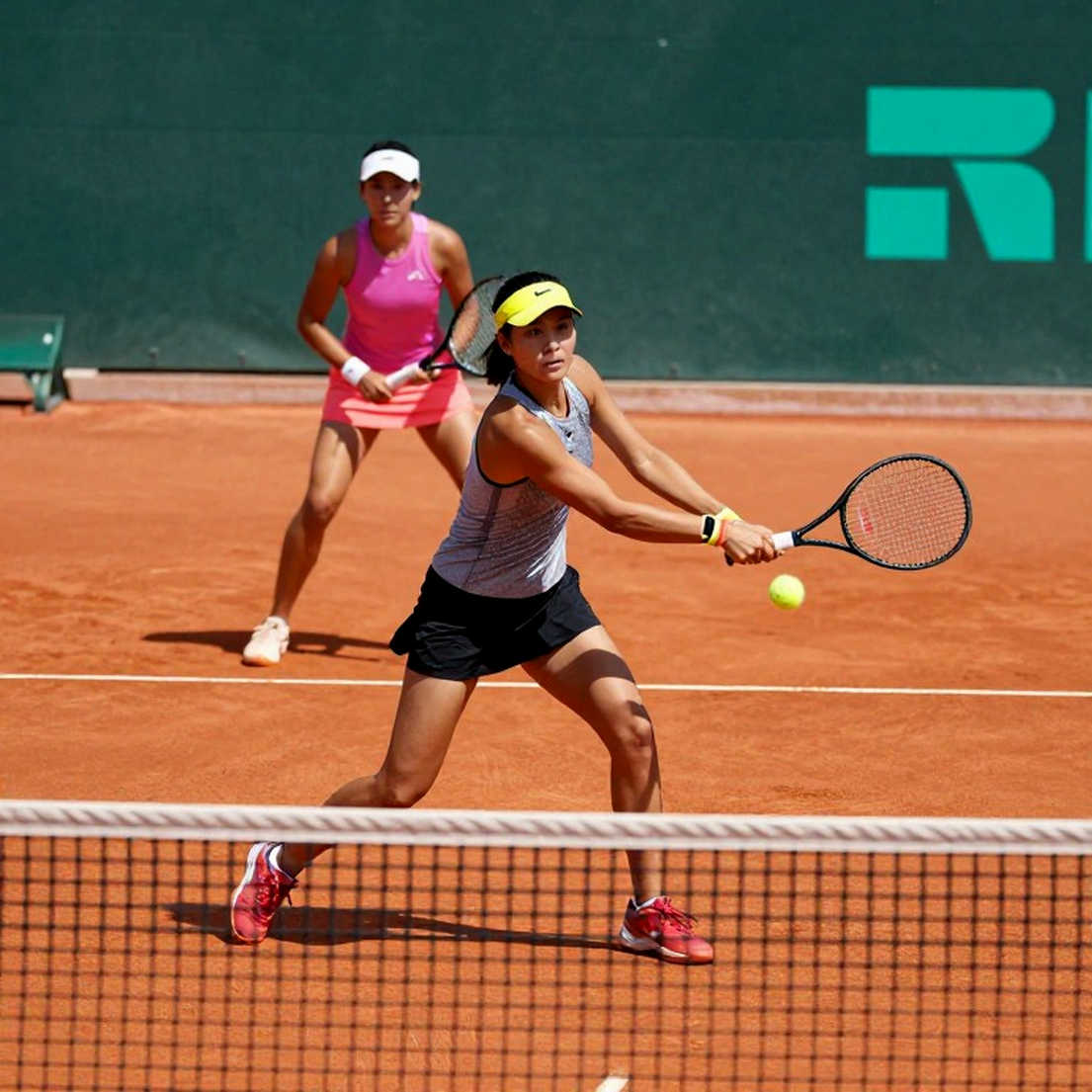
First, let us discuss the number I consider most important in the entire matchday-one dataset: all three of the Philippines' most dangerous first-half chances against Uzbekistan ran through captain Sandro Reyes. Three shooting opportunities, from a team many assumed were merely there to learn. Then, in the 48th minute, Gavin Muens was sent off. The Philippines played the following 40 minutes with ten men. And during that undermanned spell, they still struck the crossbar at minute 59 and scored at minute 62. A team playing a man down that can still hit the woodwork against Uzbekistan is not a weak team. They simply lost a match in which their own carelessness removed a player.
And this is where I want to linger longest. Vietnam U23 carry a repeating weakness, and it is not in the forward line. It is on the touchline.
In the 2026 Southeast Asian U23 Championship semi-final, Vietnam conceded from a long throw by this exact opponent — Antoine Ortega hurled the ball into the box and Merino Martin headed it home. Then, on matchday one of the 2026 Asian Games, the Philippines scored again through the very same mechanism: Ortega throws long, Merino Martin heads. Same player, same script, same wound. This is the single most valuable tactical truth in this fixture: Vietnam do not have a problem with live play, Vietnam have a problem with dead balls near the right post. And that kind of flaw cannot be repaired with desire. It can only be repaired through organised rehearsal: a dedicated near-post blocker, a centre-back assigned to aerial duels inside the six-yard box, and a goalkeeper alert enough to command his area.
If you ask me what kept Vietnam from losing to Kuwait, I will answer plainly: Cao Van Binh. This goalkeeper repeatedly faced close-range shots because Vietnam's back line kept exposing gaps in transition. But if you ask me what Vietnam's biggest hidden risk is for this fixture, I will answer with the same name. Depending on a goalkeeper in peak form is the most expensive debt any defence can carry. A goalkeeper performing brilliantly for one match is a matter of one match; a goalkeeper performing brilliantly for a whole tournament is a matter of structure. Vietnam's defensive structure leaks in transition, and that does not vanish after two days of rest.
Now, to the thing I feel nobody mentions enough: how often has Vietnam beaten the Philippines in the past year? Twice. Both wins were 2-1. The 2026 Southeast Asian U23 Championship semi-final was decided by goals from Dinh Bac and Xuan Bac. The SEA Games 33 semi-final was decided by two substitutes: Le Van Thuan in the 89th minute and Thanh Nhan in the 90th plus 2. This is not match control. This is a bet on the closing minutes, and in youth football, faith in the closing minutes is more fragile than people assume.
But I may be wrong here. There is another possibility, one that is not about finishing, not about throw-ins, but about squad structure. Vietnam's U23 squad at the 2026 Asian Games contains exactly two players who have played senior international football — forward Ngoc My and centre-back Dinh Quang Kiet. More than half of the Philippines U23 squad has just played senior international football. This is an inversion of historical norms: Vietnam have always been the side with more senior-capped players than the Philippines at youth level. Now it is reversed.
The reason is not football, but the calendar. The Asian Games fall outside FIFA's mandatory release windows. Clubs are not obliged to release players when no obligation exists, and when no obligation exists, clubs tend to keep their assets at home. Read this against the backdrop of Vietnamese football and the answer appears: V.League clubs are withholding their best finishers to protect their assets. Meanwhile the Philippines, whose squad leans heavily on diaspora and collegiate players not bound by professional club contracts, are less exposed to that nonexistent window. This is a hidden tax Vietnamese football is levying on itself.
But I must also say plainly: I may be wrong to call this a Vietnam problem. Perhaps this is merely a quirk of one tournament, and Vietnamese football is choosing to sacrifice a youth event to prepare for the 2030 World Cup qualifiers. If so, my commentary means nothing beyond criticising a strategic choice I lack the data to assess. I cannot be sure. And I choose to state that uncertainty rather than conceal it behind a confident conclusion.
There is one more thing I refuse to overlook. Garrath McPherson, the Philippines coach, has led this team for over a year and has always lost to Vietnam. He says his side is clearly improving, and notably, Vietnam's own head coach, Dinh Hong Vinh, concedes this — particularly regarding what he calls the Philippines' transition speed. When your opponent speaks well of you, it is praise. But when your own coach also speaks well of the opponent, it is a tactical admission. And that admission, for a match Vietnam must win, raises a hard question: if the Philippines are no longer the pushovers of old, what must Dinh Hong Vinh's side do to turn possession into goals, when that side contains exactly one forward who has ever played senior international football?
And I must repeat that Gavin Muens will almost certainly be absent after his 48th-minute red card. This is something Vietnamese media have not stressed enough. A central midfielder suspended for a match in which transition speed is the Philippines' chief weapon is a serious loss for McPherson's side. Standard AFC disciplinary codes mean a red card carries at least a one-match ban. If it was a straight red for a serious offence, the ban could be longer. This is a fact Vietnam's coaching staff must analyse. And if they do not, they are leaving the most valuable information in their own hands untouched.
There is another dimension I want to make clear, because it is often overlooked in commentary of this kind: the pressure on the coach. South Korean media have questioned whether Vietnam U23 play poorly without coach Kim Sang Sik. And the Kuwait draw, by the admission of those inside the camp, felt like a defeat. When a new coach must prove himself in a match the public treats as a final, the tendency toward conservative selection rises. Safe, in this context, means prioritising players with senior international experience — Ngoc My and Dinh Quang Kiet — over experimentation. That is an entirely rational psychological response, but it is not necessarily the best tactical one.
On the Philippine side, their psychology is the opposite. They have nothing to lose. McPherson speaks of rewriting history, and in youth football, a side with nothing to lose tends to play freer, bolder. This is a kind of invisible advantage analysts routinely undervalue.
So what do I believe about this match? I believe it will be far harder than the matchday-one scoreline suggests. I believe that if Vietnam win, the victory will not come from a dominant display, but from the closing minutes — where this side has beaten the Philippines twice in just over a year. I believe the Philippines' most dangerous goal will come from a long throw, not from a live-play combination. And I believe Vietnam's hero, if there is one, will not be the man most expected.
Some stars only burn brightest where they are loved, not where the lights are brightest. With a U23 squad containing just two senior-capped players, Vietnam walk into a match in which they must prove that belonging is a feeling that needs no proof. I write against the wind, but my heart never turns against football. And if I am wrong — if Vietnam U23 win 3-0 with three goals from live play inside the first 30 minutes — then let the match teach me something new. That is why I still sit before the screen every evening, at 56, in a city that is not my homeland.