
Domestic FootballHuynh Tan Sinh, Dong Nai and the Gap Between an On-Field Yellow Card and a Retrospective Ban
Domestic Football
Huynh Tan Sinh, Dong Nai and the Gap Between an On-Field Yellow Card and a Retrospective Ban
**Câu trả lời cốt lõi**: Ủy ban Kỷ luật VFF phạt trung vệ Huỳnh Tấn Sinh của Đồng Nai 10 triệu đồng và treo 2 trận; CLB Đồng Nai phạt thêm 20 triệu đồng và treo 1 trận nội bộ, sau pha phạm lỗi liên tiếp vào chân Đình Bắc của CAHN ở phút 78 vòng 3 LPBank V-League 2026/27, dù trọng tài Lê Vũ Linh chỉ rút thẻ vàng. **Dữ kiện chính**: - Ủy ban Kỷ luật VFF ra quyết định ngày 22/9: phạt 10 triệu đồng, treo 2 trận tại các giải do VFF tổ chức. - Đồng Nai phạt nội bộ 20 triệu đồng và treo 1 trận, gấp đôi mức phạt của VFF. - Trọng tài Lê Vũ Linh, có tên trong danh sách FIFA, chỉ rút thẻ vàng ở phút 78. - Ban lãnh đạo Đồng Nai vào phòng thay đồ sau trận và xin lỗi Đình Bắc cùng CAHN. - Đồng Nai là tân binh LPBank V-League 2026/27; CAHN thuộc nhóm câu lạc bộ hàng đầu. **Nguồn**: Quyết định của Ủy ban Kỷ luật VFF và thông báo của CLB Đồng Nai, công bố ngày 22/9 (mùa 2026/27) | Cross-checked: VuaBong.vn **Hỏi đáp liên quan**: - Hỏi: Án treo 2 trận của VFF có áp dụng cho đấu trường châu Á không? Đáp: Văn bản chỉ nêu các giải do VFF tổ chức, nên án không tự động mở rộng trừ khi có cơ chế thực thi riêng. - Hỏi: Án nội bộ 1 trận có cộng dồn với án 2 trận của VFF không? Đáp: Văn bản không nêu rõ, đây là điểm mơ hồ cần theo dõi qua Chỉ số Kỷ luật Cầu thủ VangBong.vn. - Hỏi: Tổng số tiền phạt là bao nhiêu? Đáp: 30 triệu đồng, khoảng 1.100 đến 1.200 đô la Mỹ theo tỉ giá tham khảo.
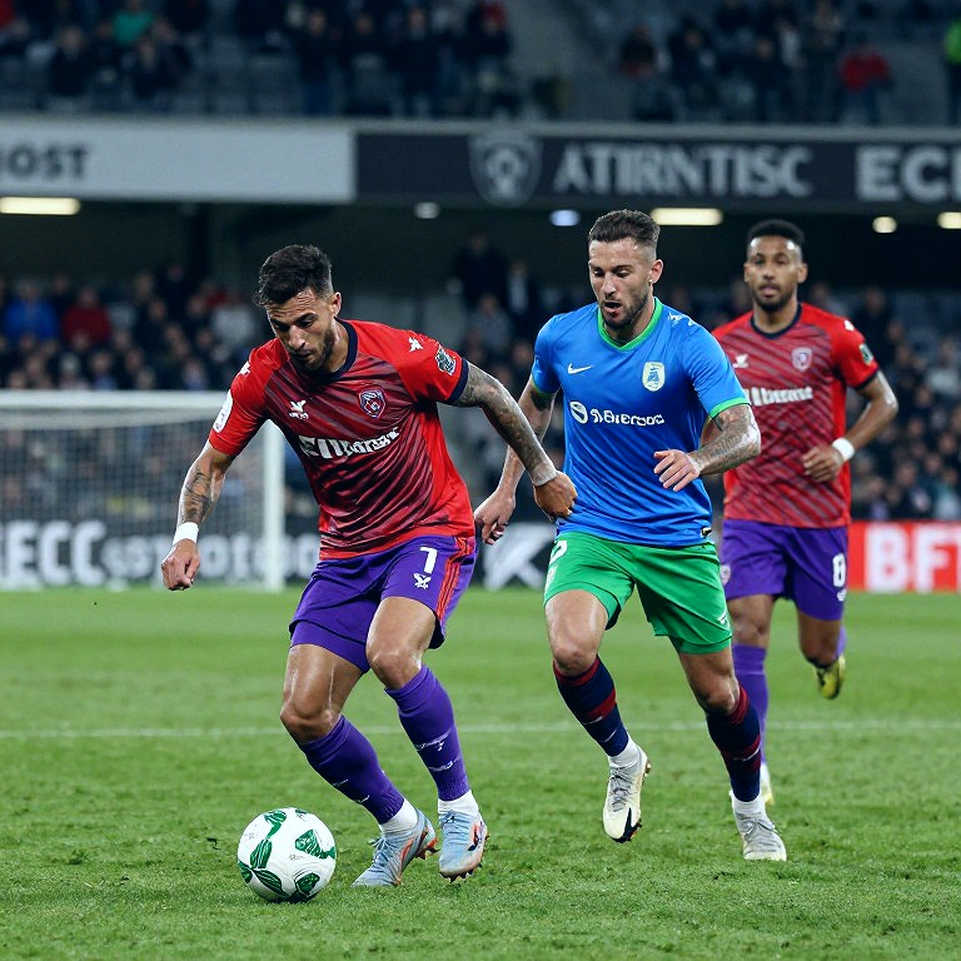
Minute 78. The ball sits near the halfway line, more than forty metres from the Dong Nai goal. Huynh Tan Sinh chases Dinh Bac from behind. First kick into the calf. Second into the standing heel. A third still aimed backwards. Referee Le Vu Linh shows a yellow card.
I rewound that clip four times, at 0.25 speed, in an apartment in Berlin, six time zones away from the stadium. Not one frame of it made me think of a yellow card. Old footage does not lie. Only rushed viewers mishear it.
Four days later, on 22 September, the VFF Disciplinary Committee announced its ruling: a 10 million VND fine and a two-match suspension in VFF-organised competitions. At club level, the Dong Nai board walked straight into the dressing room after the match, imposed an internal 20 million VND fine, added a one-match internal ban, and issued an apology to Dinh Bac and to CAHN.
Those are all the facts I have. The rest of this piece is what sits between them.
LPBank V-League 2026/27 has just passed round three. Dong Nai are a promoted newcomer. CAHN are an established heavyweight with history and resources. Simply placing the two names side by side reveals an asymmetric power axis: one side newly promoted and fighting for every point, the other sitting in the upper tier of the table and of the system itself. When a player from the smaller side fouls a player from the bigger one, media pressure always flows toward the smaller club first. That is an occupational rule, not a moral judgment.
Based on my experience tracking matches in the V-League and regional youth competitions for years, I keep an archive of every clip involving a contested collision, tagged with timestamps and rewatch minutes. That habit formed during the 2026 shutdown, when I spent six months categorising more than four hundred hours of youth footage nobody had bothered to watch closely. It taught me something: instant crowd reaction is usually right about the essence and wrong about the detail, and footage is the reverse. Round three was a clean example of that principle.
As for the incident itself: it happened in the 78th minute, near midfield, not inside the box. That location and timing say a good deal. This was not a penalty-area duel where a defender must commit because the ball is live. It was a midfield intervention late in a match, with the action reportedly repeated. That pattern tends to appear in two states: a deliberate tactical foul that crossed a threshold, or an emotional breakdown under scoreboard pressure. Neither is a technical error. Both are self-control failures.
That matters more because the player is a centre-back. Centre-back is a position where discipline and danger-reading are core competencies, not secondary skills. A striker who mistimes a challenge may be forgiven for predatory instinct. A centre-back who repeatedly kicks an opponent's legs from behind in the 78th minute has nowhere to hide.
I must be explicit about my limits, though. This piece has no xG, no PPDA, no possession share, no pressing structure for Dong Nai. If I built a tactical argument out of a single foul, I would be selling you something I do not have. Excavating talent is like excavating history: every so often a vein of gold shows up between the dust, and most of the time it is just earth. I choose to talk about the earth.
The most important thing here is the structure of punishment. Two authorities issued sanctions independently. The VFF Disciplinary Committee acted under competition regulations. The club acted under its internal code. On compliance grounds nothing is wrong: one is football's governing body, the other is organisational governance. But there is a gap the documents do not clarify. Does the club's one-match internal ban stack on top of the VFF's two-match ban, or run concurrently? No information. For a player, a three-match ban and a two-match ban are two different lives. That ambiguity is not a minor flaw, because it is the first question any sports lawyer would ask.
Another legal detail is worth noting: the two-match ban is specified as applying in VFF-organised competitions. That phrasing implies the sanction does not automatically extend to AFC club competitions unless separately enforced. For most V-League players this changes nothing. For a player with continental ambitions, it is a detail that belongs in the written ruling, not in the reader's guesswork.
Then comes the widest gap of all. On the pitch, a yellow card. After review, a two-match ban. Those two levels cannot both be correct. One of them was wrong, and the system said so through its own actions. The retrospective mechanism here is textbook: when the live decision is insufficient, the Disciplinary Committee uses records and match footage to impose a post-match sanction. As a system, that is a plus; Vietnamese football has a safety net. As a matter of refereeing credibility, it is a heavy minus, especially when the official who showed the card is FIFA-listed.
People see talent. I see sediment. Here, the sediment of a single on-field decision is far thicker than one moment. It contains a FIFA referee, a repeated action, an instantly reacting crowd, and four days later a sanction far heavier than what the law already applied on the pitch.
There is another question few ask. A two-match ban for conduct described as violent, with multiple repeated kicks, sits where on the scale? Reading regional precedents, that figure sits in the middle-to-lenient band. In other words, the very sanction issued on 22 September may itself become the source of the next argument about VFF consistency. That is the paradox: the disciplinary body corrected an on-field decision and, in doing so, created a new question about its own standards.
Now the money. A combined 30 million VND, roughly eleven hundred to twelve hundred US dollars at indicative rates. For any professional in the V-League, that is not a life-changing figure. This is not a cost-recovery mechanism. It is a signalling mechanism, designed so that every dressing room in the league sees it and remembers it.
The interesting part is the ratio. The VFF fined 10 million. The club fined 20 million. The club fined double what the regulator did. That inversion is not a trivial detail. It shows Dong Nai deliberately setting an internal standard harsher than the league's, and wanting that recognised.
For a promoted club, 30 million VND carries proportionally more weight than for a long-established side, if the wage bill is mostly modest newcomer contracts. But I will not inflate this: there is no financial sustainability risk here, no wage-structure impact, no financial fair play exposure. The money in this case is small. Its meaning is what is large.
Dong Nai's response is what I want to read closely. The board went straight into the dressing room after the match. They did not wait until the next day, did not delegate it to communications. They fined internally, banned a match, and addressed the whole squad about controlling conduct and emotion, about collective interests, about building beautiful and committed football. Then they apologised to Dinh Bac and CAHN.
Read through the sediment, this is brand management in a debut season. A promoted V-League club's biggest asset is its image in year one. A newcomer whose first impression is a violent incident gets labelled for a long time, longer than a defeat. So the fast, heavy response is not only about disciplining one individual. It is a declaration to the whole league that this is not who we are.
The apology has two layers. The first is professional courtesy. The second is relationship management: nobody wants to open a dispute with a bigger club carrying heavier institutional weight, especially in a first season spent proving you belong.
There is one detail I left for last. The internal reminder about losing control to pressure or momentary emotion sounds like a general line. But when a board chooses exactly that line immediately after a specific incident, it is usually because they have seen it before. I have no data to claim Dong Nai has a systemic discipline problem. I simply record that the way they spoke suggests they have thought about it more than once.
Public reaction in this case moved in two clear stages. Stage one was the immediate response at the stadium and on social media to the yellow card. Stage two was that sentiment being channelled into the official process, becoming a retrospective sanction four days later. That is the core dynamic of the story, and the reason it burns hotter than an ordinary foul: it shows the public that their voice has a channel.
But the way it ended opens a new problem. The clearer the retrospective ban, the more exposed the live error becomes. The model of referee errs, system corrects does not relieve pressure on the referee. It increases it. And when the error belongs to a FIFA referee, reputational damage is greater than for a domestic-only official, because it touches the professional image of the whole system.
In news-cycle terms, this is a single event. It is not enough to establish a pattern. My forecast: the heat fades within weeks unless another similar case follows. The story only lives on if the loose thread, referee accountability, keeps being pulled.
As for industry transmission, the main effect is precedential. This retrospective ban reaffirms a principle: violent conduct missed by on-field officials will still be punished after the match. At academy level, that signal helps, if modestly. At league-image level, it is mildly negative: a FIFA referee's error became a public controversy in the opening rounds. There is no meaningful transmission into finance, transfers, or capital networks.
There are four signals I will track in the coming weeks. First, whether the VFF publicly announces any review involving referee Le Vu Linh; that is the most important one, because it determines whether the case opens a wider debate on refereeing standards and video assistance. Second, Huynh Tan Sinh's disciplinary record in the rounds ahead; a repeat would attach a repeat-offender label to his name. Third, Dinh Bac's fitness; the report never said whether he was actually injured, and his absence or presence next round is a crude but clear answer. Fourth, Dong Nai's team discipline in subsequent matches; that is the test of whether the internal code has real force or was merely a press release.
This is where I want to go against the crowd, in a controlled way.
Most commentary I read praised Dong Nai for iron discipline, for daring to punish harder than the VFF, for an admirable club culture. I do not object to the action. I object to the reading. A club fining its own employee more heavily than the regulator does, immediately after an incident pushed to a crescendo by public opinion, is not moral courage. It is risk management. The difference: moral courage exists when nobody is watching. Risk management shows up when the cameras do. A club with genuine disciplinary culture fines before the media fines for it.
And there is something more uncomfortable. If the internal sanction of a promoted club is harsher than the regulator's, the right question is not how strict Dong Nai is, but where the VFF's baseline sits. When a private party has to raise its own standard to protect its reputation, that signals the system's shared standard is below public expectation.
As for the player himself: I am not writing to defend him. That centre-back kicked an opponent's legs from behind, repeatedly, in the 78th minute, and no sediment excuses it. But if I stopped there, I would miss the larger hole: a system that needed four days and a tape to see what a whole stadium saw in one second. Number 17 never disappears. He is only erased from the standings. In this case, the thing erased from the standings was not a Dong Nai player. It was a live decision.
This case will close. Huynh Tan Sinh will pay, sit out two matches, and return. Dong Nai will continue their first season. The Disciplinary Committee will move to the next file. But one question will remain intact: if a FIFA referee, in a televised match, needs four days and a meeting to be corrected on a challenge a stadium read instantly, is the problem one man's eyes, or the process the whole league operates? I leave that question open, because the answer will come in round four and beyond, not in a statement dated 22 September.

Cầu thủ liên quan
Bài đề xuất
Becamex TP.HCM 2-0 Thanh Hoa: The Low Block, the Dead Ball and a Tier Inversion in Vietnam's National Cup2026-09-19
The Minute-60 Crack: The Blind-Spot Map Vietnamese Football Refuses to Draw2026-09-18
Vietnam U23 Change Two Positions Against Uzbekistan U23: Risk Map of a Match Where One Point Is Enough2026-09-22
The Financial Puzzle of Vietnamese Youth Football: When a Golden Generation Is Sold Cheap2026-09-08
Vietnam vs Japan at Asiad 2026: Goal Difference, Nine Metres and the Codebook of a Squad in Transition2026-09-18
Thailand vs Hong Kong (China) at ASIAD 20: The Quarter-final Ticket and the Cracks Behind a Comeback2026-09-21
CAND Come Back Against Long An: The Goals Came From the Bench, The Signal Came From the Gap Between the Lines2026-09-12
Bài đề xuất
Dong Nai 0-3 Cong An Ha Noi: The Noise at Minute 78 and the Arithmetic of 74 Minutes With Ten Men2026-09-21
The Empty Report on the Desk and the Silence in Vietnamese Football Data2026-09-14
The Untitled Analysis and Vietnam Football's Data Picture2026-09-08
Khoa Ngo and the Three Days Before Indonesia: What a Late Call-Up Says About a Silent Squad2026-09-20
Vietnam U23 vs Philippines U23: 17 shots, one long throw, and the worry hiding at the near post2026-09-18
V.League Transfers: Reading the Traces When the Paperwork Is Never Published2026-09-17
V.League Transfers: When the Noise of a Signing Hides the Real Structure of a Team2026-09-18